No Country for Old Men
Fate, free will, and mortality — essay

"Fate and free will coexist with one another in a way that suggests they are both integral parts of life and one would not exist without the other."
Choosing whether or not to believe our future is predetermined is a timeless struggle. In the novel No Country for Old Men, Cormac McCarthy uses fate, chance, and free will to identify differing perspectives on one's ability to alter the course of their own life and the challenge between free will and mortality. The idea of fate haunts all of the characters in the novel as it challenges them to question their morals and ideals in the world and pushes them to their limits. Fate and free will coexist with one another in a way that suggests they are both integral parts of life and one would not exist without the other. The novel analyzes the idea that free will can only function within the boundaries of one's mortality through analysis of different characters' perceptions of fate, symbolic appreciation for predetermined factors in life, and inevitable elements of mortality.
McCarthy introduces the concept of fate when the protagonist, Llewelyn Moss, happens upon a drug deal gone bad and a briefcase containing millions of dollars. Moss holds the money and feels "his whole life…sitting there in front of him" (McCarthy, 18). The briefcase becomes a symbol for the connection between chance and fate as Moss struggles not to "treat it like luck" (23) and instead believe this is a part of his destiny. McCarthy consistently contrasts symbols of chance and fate to demonstrate how intrinsically connected they are in Moss' life. Throughout the entirety of the novel, Moss is faced with challenges that make him question the extent to which he is in control of his choices. Just before his discovery of the money, the one drug runner who is still alive begs Moss for water and is refused. Upon returning home, Moss awakens in the night with unsettling sympathy for the man and wonders aloud, "[is that man] dead out there?" (23). Moss' fate is sealed when he returns to the place where he found the money and realizes that someone is searching for the money — and him. This realization is crucial in foreshadowing the forthcoming violent events that fate causes.
Fate is perceived in a variety of ways by different characters throughout the novel, offering a platform for the reader to interpret and compare the roles fate plays. Sheriff Ed Tom Bell, another important character in the analysis of the relationship between life and fate, recognizes fate very differently than Moss. Bell's fate is established from his desire to follow in his family's footsteps by becoming a sheriff and upholding the justice of law. When Bell is faced with the evils of Chigurh, he begins to question the value of his work and whether he can truly help society overcome the evil within itself. Bell's idea of fate is vastly different from Moss' in the sense that he is grudgingly willing to accept defeat as his fate. Bell perceives the depravity that Chigurh brings forward as something that is specific to the new world — a world in which he feels he "[is] being beaten" (306) by immorality. Bell feels an immense sense of defeat when he chooses to resign as sheriff because of the trials he is faced with, thus also signifying the defeat of a society that can be controlled by higher law.
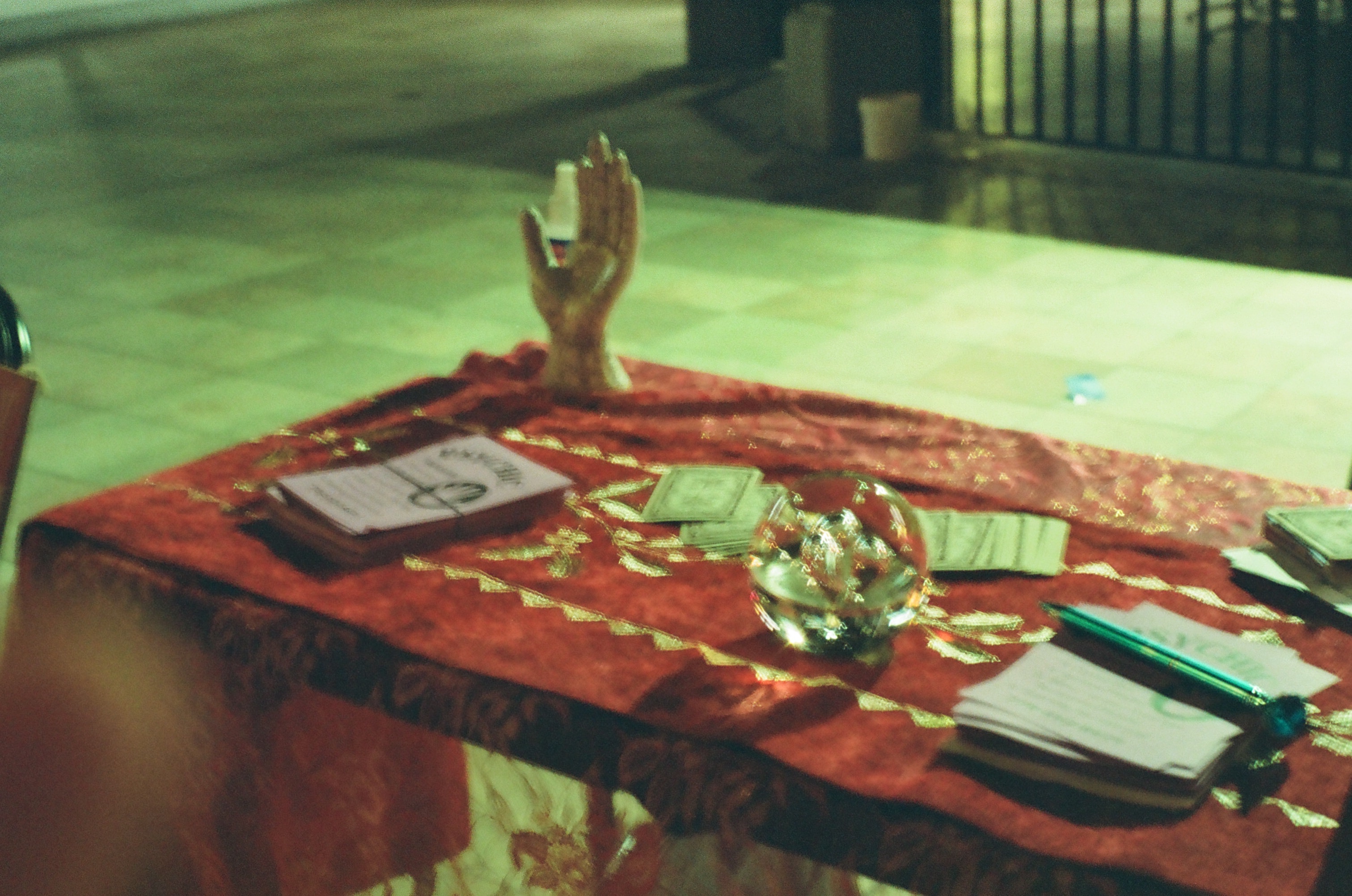
Throughout the novel, fate is personified and embodied through the antagonist, Anton Chigurh, in a way that establishes him as a force acting on fate's behalf. Chigurh believes that every action in one's life is predetermined and uses this as justification for his merciless doings. In even his most gruesome acts, Chigurh exhibits his personal belief that he is only fulfilling the wishes of a higher force. Prior to killing a man whose car Chigurh needs, he "place[s] his hand on the man's head like a faith healer" (7), demonstrating his own certainty that he is only acting on an inevitable fate. Chigurh believes he is the universal incarnation of fate and that every decision one makes in life will bring them closer to the inevitable end — death. Despite one's ability to use free will in hopes of escaping inevitability, Chigurh articulates his belief that "a person's path…seldom changes and even more seldom will it change abruptly" (259), as he justifies his reasoning aloud before killing Carla Jean. Throughout the novel, Chigurh is driven by the concept that fate is the controlling factor of life; however, he also believes that fate channels its needs and desires through him, which gives him a false sense of invincibility. In a fleeting moment of mortality, Chigurh is struck by an oncoming vehicle as he passes through an intersection. This incident is used to strengthen the connection between fate and mortality as Chigurh is humanized and loses control of his power over his life — much like the fateful events that led to the deaths of many other characters. Chigurh truly believes he serves fate; however, when Chigurh is subjected to an incident that almost takes his life, it becomes evident that even he is unable to escape fate.
Fate is a universal catalyst in the lives of all the characters despite its ability to display itself independently according to each person's individual beliefs. Carla Jean is also subjected to fate, caused by her marriage to Moss, when she is face to face with Chigurh following Moss' death. Carla Jean is subjected to her own fate as well because Chigurh believes that Moss' fate comes by association, even though she is more open to trusting that her fate is determined by a higher power such as God. When she is confronted with Chigurh's request to call the fate of her life on a coin toss, she refuses because "God would not want [her] to do that" (258), despite her previous acceptance of her fate being determined by Chigurh alone. In contrast to Carla Jean's acceptance of her own fate and premature death, she also discusses her disbelief that Chigurh is in control of fate's wishes and establishes that she does not believe him to be the mastermind behind universal fate. Chigurh attempts to blur the lines between chance and fate by saying a coin toss is a predetermined answer to the fate of one's self and suggesting that Carla Jean call heads or tails. Carla Jean initially refuses to do so, as she does not believe that a coin being thrown in the air is an influential part of the inevitable path of one's life. However, due to Chigurh's persistence and her own survival instinct, she calls the coin and, when she is wrong, exclaims that "the coin didn't have no say. It was just [Chigurh]" (258). Carla Jean evidently places her trust in a higher power, despite her own potentially avoidable death, and accepts that fate is immediately in control of her life. Fate is a confirming and controlling causation that forces Bell and Carla Jean to delve into an understanding of their individual existence in the present world as well as the future.
As No Country for Old Men compares the relationships between fate, free will, and mortality, it becomes evident that despite death being an inevitable part of each individual life, the way one arrives at the end is not necessarily predetermined. Fate is embodied by the antagonist, Anton Chigurh, in order to create an understanding of the connections between one's individual choices and the ability for those choices to alter one's path. McCarthy uses the lives of various characters to demonstrate and strengthen the role fate plays in one's life. The novel prominently develops different positions and connections between fate and allows the reader to use this in order to reflect on the realities of mortality.